



Chiwan Tin Hau Temple Dragon Pillar
The granite dragon pillar of Tianhou Temple in Shekou, Shenzhen. The establishment of Tianhou Temple can be traced back to the Song Dynasty, with a magnificent atmosphere. During the Ming and Qing dynasties, the Chiwan Tianhou Palace was located at the foot of Xiaonan Mountain in Shenzhen, nestled by the mountains and the sea, with beautiful scenery. Its establishment dates back to the Song Dynasty, with a magnificent momentum. It was repaired multiple times during the Ming and Qing dynasties, and its scale grew day by day. It became the most important Tianhou Temple along the coast at that time. Whenever imperial envoys went to Southeast Asian countries, they would stop their ships and offer incense here, praying to the gods for protection with great rituals.

Chiwan Tin Hau Temple Dragon Carving
The granite dragon sculpture at Tianhou Temple in Shekou, Shenzhen. The establishment of Tianhou Temple can be traced back to the Song Dynasty, with a magnificent atmosphere. During the Ming and Qing dynasties, the Chiwan Tianhou Palace was located at the foot of Xiaonan Mountain in Shenzhen, nestled by the mountains and the sea, with beautiful scenery. Its establishment dates back to the Song Dynasty, with a magnificent momentum. It was repaired multiple times during the Ming and Qing dynasties, and its scale grew day by day. It became the most important Tianhou Temple along the coast at that time. Whenever imperial envoys went to Southeast Asian countries, they would stop their ships and offer incense here, praying to the gods for protection with great rituals.

Granite altar of the 26th Dynasty of Egypt "Ancient Egyptian hieroglyphic altar"

Pink granite statue of Ankhkirednefer in ancient Egypt
This statue has a beetle on its head, the symbol of Osorkon II engraved on its arm, and the image of Osiris inside the shrine. The edge of the shrine and the back pillar of the spire are both engraved with hieroglyphs. This statue was discovered in Ter Mashuta, Egypt, and is 62 centimeters high, 28 centimeters wide, and 38 centimeters long. It is now housed in the British Museum. Ankhkirednefer served as the Grand Inspector of the Palace and an excellent secretary of the Temple of Artum under the rule of Osorkon II, the fifth king of the 22nd Dynasty of Egypt.

Part of the Head Statue of Pharaoh Amenhotep III in Ancient Egypt
This sculpture is carved from red granite and has a height of 63.50 centimeters. This statue can be traced back to approximately 1370 BC and was discovered within the walls of the Muth Temple in Karnak, ancient Egypt. This huge statue has been broken, and currently known parts include a head and an arm. Both of these parts are now at the British Museum.

Granite Statue of the 25th Dynasty of Ancient Egypt, "The Sanctuary of Amun: King Tahaka and the Ram Statue"
This artifact is a statue of the god Amun, known as the protector of Amun: the statue of King Tahaka and the ram, appearing in the image of a ram, protecting King Tahaka. It was discovered at the T Temple in Kava, Sudan and is now housed in the British Museum. It was made between 690 BC and 664 BC, during the 25th Dynasty of ancient Egypt. The ram lay on its belly, with its front legs folded underneath, and the three-dimensional statue of King Tahaka stood between them. There is a hieroglyphic inscription around the base, declaring from front to back that Tahakha was the son of Amun and Mutt, and he "completely satisfied the heart of his father Amun".

The granite statue of Amenemhat III from the 12th Dynasty of Egypt
The statue is a huge granite head of Amenemhat III, from the Bast Temple in Bubastis, Egypt. The statue was made around 1800 BC, during the 12th Dynasty of Egypt. His lips are full, and the oblique muscle under his lower lip shows tension in his jaw. His expression appeared serious, even harsh. The height of the statue is 83 centimeters, weighing about 1000 kilograms, with a width of 82 centimeters and a depth of 69 centimeters. The statue is now housed in the British Museum.

Modern Imitation Granite Mayan Statue

Ramses II Granite Head British Museum Collection
This statue depicts the 19th Dynasty Pharaoh Ramses II wearing a holy serpent crown and a Nimes turban. The statue was damaged by the time it was found, with the limbs and lower half missing. It is one of a pair of statues of Ramses originally located on the flank of the gate of the Temple of Lamesim, and the head of the other statue is still at the gate of the Temple of Lamesim. The statue was transported from Egypt to England in 1816 by the Italian explorer Giovanni Berzoni and acquired by the British Museum in 1821. It is now one of the representative artifacts of the British Museum, displayed in Hall 4.

Popular Models
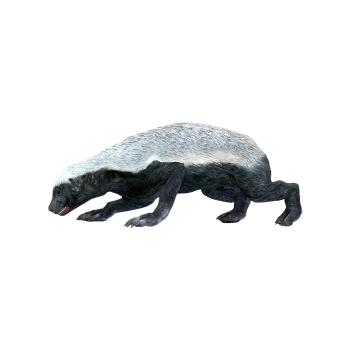
Honey Badger (3D animated model)
192 View
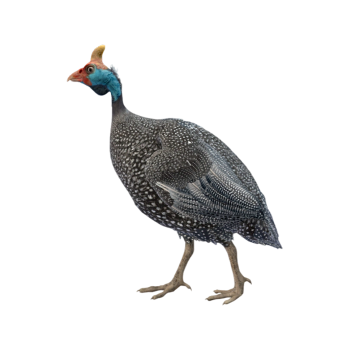
Guinea fowl (3D animated model)
163 View
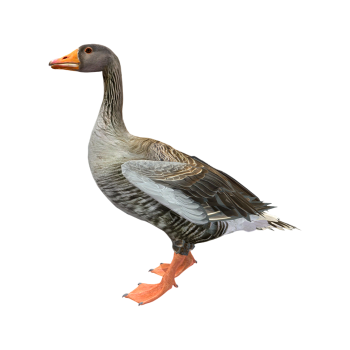
Wild Goose (3D animated model)
185 View
Red Fox (3D animated model)
153 View
Random Model
Old Western European Brick Furnace
878 View
Ksitigarbha King Bodhisattva Statues
601 View

Shuleigelin frog female
811 View



Huangxiangliu Monkey Skull
831 View


Lamborghini Revuelto
1296 View


Xilinx SP701 Development Board
1079 View